Introduction
The practices surrounding death and mourning vary significantly across cultures, reflecting the diverse beliefs, traditions, and social norms that different societies hold. These customs are deeply rooted in the cultural psyche and can provide insight into how communities view life, death, and the afterlife. This exploration of global mourning practices reveals not only the uniqueness of each tradition but also the universal human experience of dealing with loss.
Western Traditions
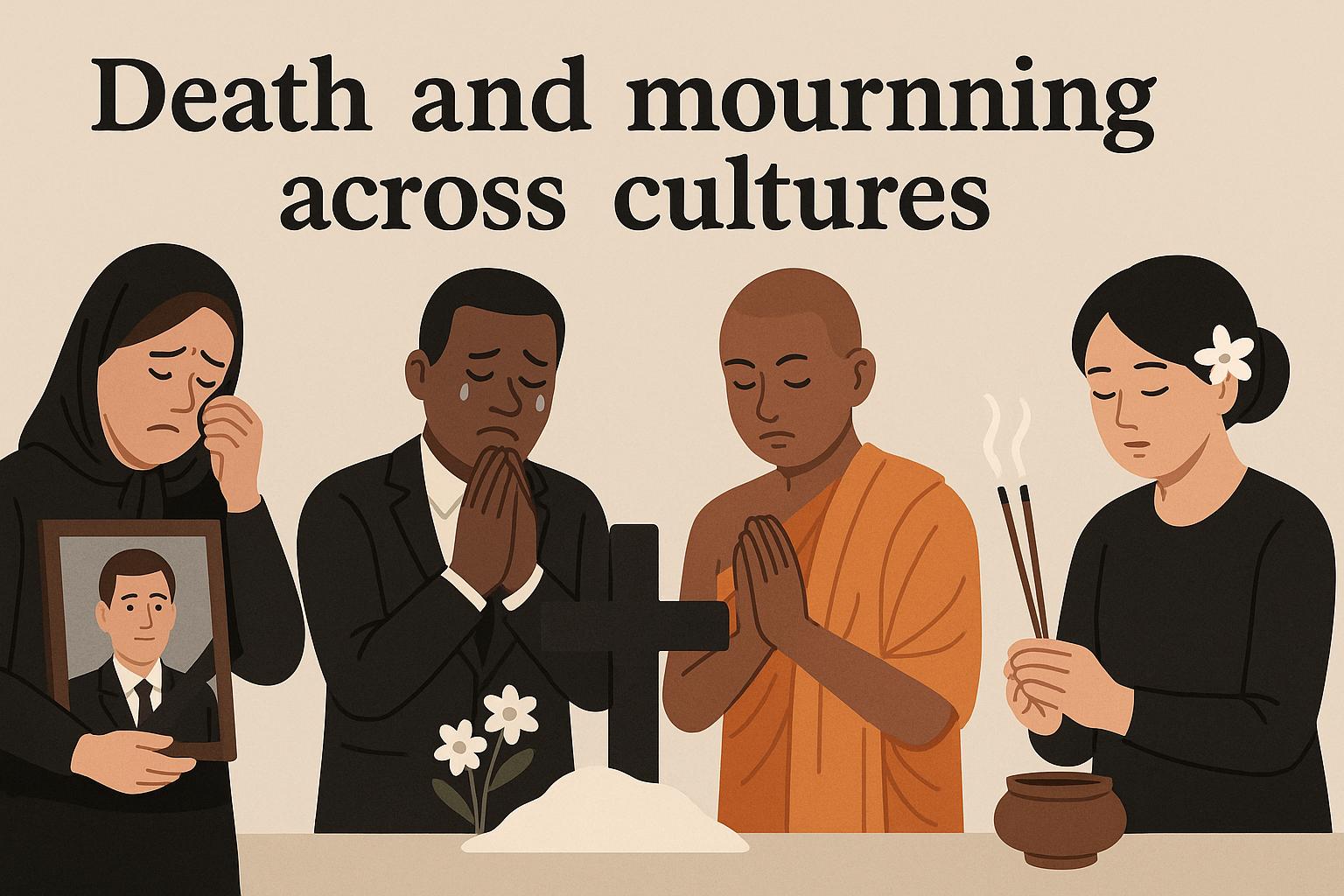
In many Western cultures, the approach to death and mourning is often characterized by structured ceremonies and a focus on commemoration. A funeral service is commonly organized, with the ceremony taking place in religious institutions, family residences, or designated funeral homes. The deceased might be either buried or cremated, depending on personal, familial, or religious preferences.
Black clothing worn by mourners is a widely observed custom, symbolizing bereavement and respect for the deceased. These ceremonies are typically inclusive events where family and friends gather to pay their respects. This can be achieved through speeches, prayers, personal anecdotes, and the sharing of cherished memories, providing a space for communal support and reflection.
Christian Mourning Practices
Christian customs often frame death within the larger context of eternal life, offering hope and comfort through religious beliefs. The funeral service may feature scripture readings, hymns, and eulogies. Rituals such as the lighting of candles and specific religious rites add depth to the ceremony, highlighting beliefs in the journey of the soul and the promise of resurrection. These practices aim to both honor the deceased and provide solace to the grieving community.
Asian Traditions
Asian cultures offer a rich tapestry of death and mourning traditions, with a strong emphasis on honoring ancestors and maintaining family ties. These practices often blend religious beliefs and cultural norms, resulting in a diverse range of rituals and customs.
Buddhist Practices
In Buddhist traditions, death is perceived as a transition rather than an end, aligned with the core belief in samsara—the cycle of birth, death, and rebirth. Elaborate funeral rites are conducted to support the deceased’s journey towards a more favorable rebirth. The presence of monks is integral, as they offer chants and guide various rituals, facilitating the spiritual transition. These rites emphasize detachment from the physical body and the continuation of the soul’s journey.
African Traditions
The African continent presents a wide array of mourning customs, each unique to its cultural context. Community involvement plays a critical role in many African death rites, highlighting the interconnectedness of individuals within these societies.
Ghanaian Practices
In Ghana, funerals are vibrant social events that may stretch over several days, combining elements of mourning and celebration. This reflects a deep-seated belief in the unity between the living and the dead. Funerals are viewed as an opportunity to honor the deceased while celebrating their life’s journey. The use of color carries significant meaning, with red and black being the traditional colors of grief. These events bring together families and communities, reinforcing social bonds and shared cultural values.
Indigenous Traditions
Indigenous cultures often approach death as a natural part of the life cycle, intricately linked to their connection with the land and communal identity. These beliefs are reflected in their mourning practices, which emphasize the continuation of life beyond physical death.
Native American Practices
Among Native American tribes, mourning traditions can vary greatly, reflecting the diversity of cultural beliefs across different tribes. Some ceremonies are rooted in the reverence for nature, underscoring the interconnectedness of all living beings. Rituals often involve honoring the earth and acknowledging life’s cyclical nature. Personal belongings of the deceased are sometimes burned, symbolically accompanying them to the afterlife and ensuring they are cared for beyond the physical world.
Conclusion
Exploring the varied practices surrounding death and mourning across cultures illuminates the rich tapestry of human beliefs and traditions. Despite differing customs, a common theme emerges—a shared effort to find meaning in the final transition of life. Understanding these diverse practices fosters respect and empathy for the myriad ways in which cultures navigate grief and loss. This awareness not only enriches our appreciation of cultural diversity but also underscores the universal human quest for connection, understanding, and solace during life’s most profound moments.