Political Protest and Cultural Expression
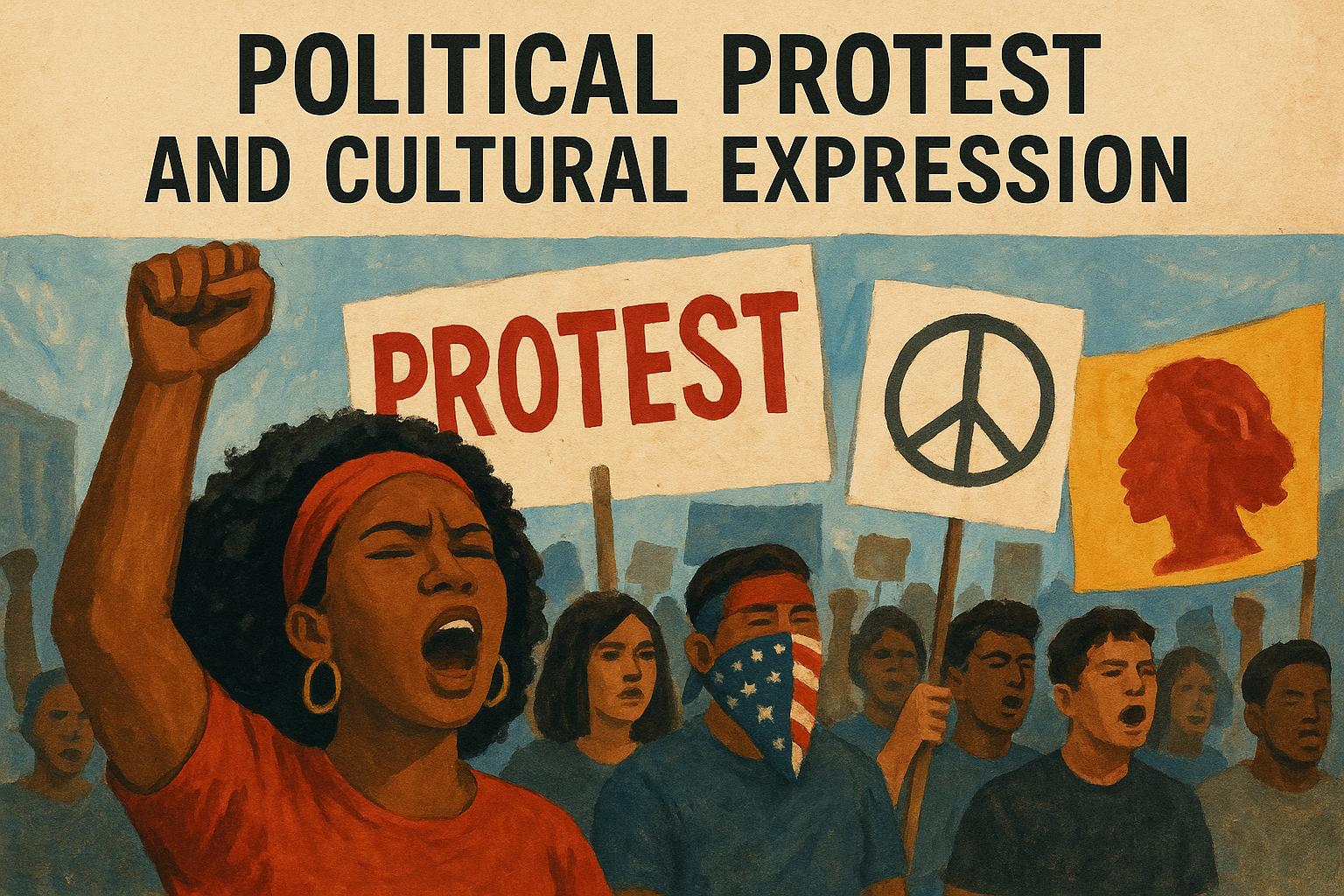
Political protests are a fundamental aspect of many societies, representing a critical means by which citizens express dissent and advocate for change. An interesting dimension of these protests is how they intersect with cultural expression, often serving as a platform for various forms of artistic and cultural activities that convey powerful messages.
Throughout history, political protests have often been a catalyst for significant societal changes. In these events, citizens come together to voice their opposition to policies, leadership, or movements they find unjust, aiming to influence public opinion, policy changes, or even governmental structure. As these gatherings unfold, cultural expression emerges as a vivid and dynamic component, helping to enhance the reach and impact of the protests. Cultural forms such as art, music, literature, and performance play critical roles in expressing dissent, bridging communication gaps, and fostering a sense of unity among protesters.
The Role of Art in Protest
Artistic expression plays a significant role in political protests, offering a visual and auditory medium through which protesters can communicate their messages. This can include murals, performance art, and music, all of which help to draw attention to causes and galvanize public support. Art in protests provides a way to simplify complex issues, making them more accessible to a broader audience.
Murals and Street Art
Murals and street art are particularly prominent in protests, offering vivid and engaging representations of the issues at hand. These artworks often appear on walls and roads, turning public spaces into canvases that challenge authority and question societal norms. Often created in public spaces overnight in response to socio-political climates, these pieces of art leverage their accessibility to engage everyday onlookers, transforming static cityscapes into living narratives. The enduring nature of some murals also serves as a visual reminder of the causes long after the protests have ended.
Street art can encapsulate powerful symbolic messages or relay direct statements. For instance, during times of social unrest, such artwork can become unofficial memorials for victims of injustice or celebrated visions of an ideal world, providing communities with a voice that resonates long after chants have faded. Their permanence contrasts with the temporality of protests, serving as both a reminder and a call to continuous vigilance and action. Furthermore, the anonymity often involved in creating these works combines security for artists with a mysterious allure, potentially drawing more attention.
Performance Art
Performance art in protests involves live presentations where artists use their bodies or other mediums to express political messages. This form of art conveys emotion and intention directly, leaving a significant impact on observers. These performances can vary from silent demonstrations to theatrical enactments, aiming to invoke thought and dialogue about social or political issues.
Such performances often utilize surprise and unconventional methods to capture attention. For instance, they might involve artists dressed in symbolic costumes or engaging in repetitive actions to highlight societal monotony or oppression. The ephemeral nature of performance art means that its impact is immediate and penetrating, offering a real-time engagement that standard speeches or slogans might lack. This art form can also bridge language barriers, making it an effective tool in multinational protests where verbal communication might be challenging. By employing universal symbols, gestures, and expressions, performance art transcends cultural and linguistic confines, binding participants and observers with a shared emotional experience.
Music and Political Protests
Music is another potent form of cultural expression within protests. Songs and chants are often rallying cries during demonstrations, helping to unify participants and boost morale. Political movements throughout history have effectively used music to communicate their messages and inspire change. Protest songs often encapsulate the spirit of a movement, making them an enduring element of political activism.
Historical Examples
Throughout history, various movements have relied on music to enhance their protests. For instance, during the civil rights movement in the United States, songs like “We Shall Overcome” became anthems of hope and resilience. These songs were not just motivational; they served as rallying cries, uniting disparate groups under a single cause. Music had the power to cross racial, cultural, and geographical boundaries, embodying both the pain of current struggles and the hope for future equity and justice.
Similarly, the anti-apartheid movement in South Africa celebrated and spread its message through music, which resonated internationally, amplifying the protestors’ calls for justice. The melodies and lyrics of these songs played significant roles both locally and globally, with international audiences joining the chorus of condemnation and hope for reformation. The use of traditional musical forms and native languages within these protests highlighted deeply rooted cultural identities while underscoring broader political messages.
Cultural Expression as a Form of Resistance
Cultural expression transcends the act of protest itself by embedding its messages in broader social narratives. This form of resistance allows movements to persist beyond the immediacy of demonstrations, permeating art, literature, and daily life. Culture thus acts not only as an expression of resistance but also as a tool for education and consciousness-raising.
In literature, for example, politically charged narratives critique societal ailments while providing individuals with tools to interpret and challenge their realities. Through storytelling, complex social issues become approachable, encouraging readers to empathize and identify with the causes. Similarly, art expositions and installations in museums or galleries provide platforms for political narratives to reach audiences long after street protests have ended. These venues grant legitimacy to political expressions, prompting mainstream engagement with revolutionary ideas.
Long-term Impact
The impact of cultural expression in protests often extends beyond the immediate political context, influencing societal attitudes and shaping the discourse around key issues. By embedding protest narratives in cultural outputs, movements can achieve a sustained dialogue that encourages ongoing reflection and engagement with the topics at hand. Over time, cultural expressions born in moments of dissent become part of the collective memory, informing how societies understand and act upon historical and current injustices.
Cultural artifacts originating from protests can sustain and evolve narratives, ensuring that the ideas for which people rallied remain vibrant in public consciousness. They continually invite reinterpretation and reflection, enabling each generation to draw lessons relevant to their contemporary struggles. Furthermore, as cultures exchange and adapt these art forms across borders, the localized messages gain universal relevance, contributing to a global dialogue on justice and equity.
In conclusion, political protests and cultural expression are closely intertwined, with art serving as a powerful vehicle for message dissemination and emotional engagement. This synergy enables movements to resonate on a deeper level, fostering solidarity and driving change. Protests achieve significance and sustained impact when they embed themselves within the cultural context, influencing future discourse and actions. Hence, the interplay between protest and cultural expression not only marks the immediate moment but also carves pathways for enduring influence and reform.