Religion in Multicultural Societies
In today’s globalized world, multicultural societies are a vivid embodiment of our interconnectedness. Far from being merely theoretical concepts, these societies represent real, living communities where individuals from a vast array of cultural, ethnic, and religious backgrounds converge and coexist. Within this dynamic environment, cultural diversity unfolds as a vibrant tapestry of traditions, beliefs, and values that enrich the communal experience.
The Role of Religion
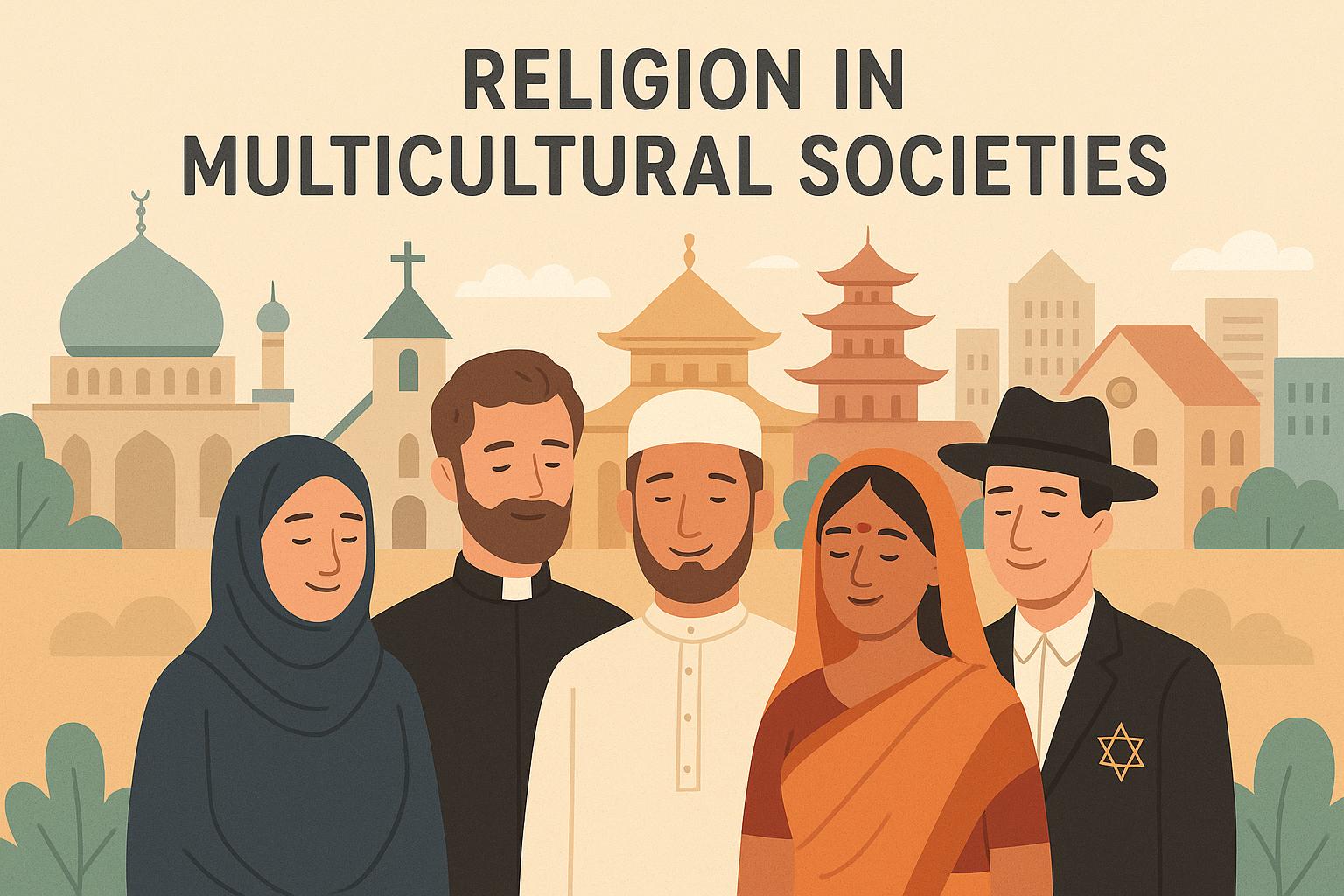
Religion occupies a significant position in these multicultural milieus. It serves not only as a moral compass that guides ethical conduct but also imbues individuals and communities with a sense of identity and belonging. In such societies, religious pluralism is not only common but also essential. Multiple religions coexist, each contributing to and influencing the social, political, and cultural landscape in intricate and meaningful ways.
In multicultural societies, religion can play a unifying role, fostering a sense of communal identity and common purpose among its adherents. Religious communities often provide support networks for individuals, acting as centers of cultural preservation and social cohesion. They offer spaces for communal worship, reflection, and celebration, reinforcing ties within the community and enriching societal fabric with diverse rituals and practices.
Challenges of Religious Diversity
While the presence of various religions can significantly enrich society, this diversity also brings with it a set of challenges. Misunderstanding and conflict are potential stumbling blocks that can arise from differing religious beliefs and practices. Such misunderstandings may lead to friction or discord, particularly when one group endeavors to assert dominance or impose its beliefs on others.
Balancing religious freedom with secular laws and policies represents a significant challenge for many governments. Legal frameworks must ensure that individuals have the right to practice their religion freely, yet they must also uphold a sense of order and neutrality that allows for peaceful coexistence.
Additionally, there is the challenge of maintaining societal harmony when religious practices intersect with secular interests. For instance, religious commandments might conflict with state laws on gender equality or education, necessitating careful navigation to respect both religious convictions and the rights enshrined in secular legislation.
Integration and Inclusion
Facilitating successful integration within multicultural societies requires deliberate efforts to promote inclusion and respect for all religious beliefs. Achieving this involves creating spaces and platforms for interfaith dialogue. Such dialogue plays a critical role in fostering understanding and tolerance among different religious communities, paving the way for peaceful coexistence and cooperation.
Education is an essential tool in this regard, as it can alleviate ignorance and prejudice by providing factual knowledge about different religions and cultures. Schools can incorporate religious studies that highlight common values among different faiths, thus fostering a spirit of inclusivity from a young age.
Moreover, inclusive policies are vital in protecting the rights of individuals to practice their religion without fear of discrimination or persecution. Legal protections and guarantees can ensure that individuals feel secure in expressing their religious identities. Governments and institutions can further this through nondiscriminatory practices in employment, education, and public services.
Community events and interfaith initiatives can also play a pivotal role in promoting integration. By celebrating different religious festivals and encouraging participation across communities, societies can cultivate a spirit of solidarity and collective joy, transcending religious boundaries and fostering a shared community identity.
Impact on Cultural Identity
Religion is a cornerstone upon which cultural identity is often built. In multicultural environments, the interplay of diverse religious traditions can lead to unique cultural expressions. This blending of traditions can result in cultural syncretism, where new forms of art, music, language, and customs emerge, reflecting a pluralistic heritage.
However, it is imperative for societies to navigate these cultural fusions with care. The cultural identities of minority groups must be preserved to ensure a genuine multiplicity of cultural expressions. This involves recognizing and respecting the distinctiveness of minority cultures while fostering mutual respect and shared values across the wider society.
Recognizing the contributions of different cultural and religious communities to the social fabric can help maintain the integrity of individual identities. Celebrating festivals, traditions, and practices from diverse backgrounds can nurture a shared understanding and respect, reinforcing the societal commitment to inclusiveness and diversity.
Conclusion
In conclusion, the presence and practice of religion in multicultural societies stand as a testament to both opportunities and challenges. Religion can enrich communities, contributing depth and diversity to the cultural landscape. However, it also calls for diligent management to minimize potential conflicts and to promote harmony among diverse groups.
By respecting and celebrating religious diversity, communities can cultivate an environment where every individual feels valued and included. This process involves continuous dialogue, education, and inclusive policy-making that uphold the principles of freedom, respect, and equity. Through conscious efforts to embrace and respect multicultural and religious diversity, these societies can thrive, becoming vibrant, inclusive spaces where all members can coexist peacefully and prosper.