Understanding Intercultural Communication
Intercultural communication involves the process of exchanging information between individuals from different cultural backgrounds. This complex exchange is more than merely converting words into another language; it entails a deep understanding of cultural nuances, beliefs, and values that can affect how messages are both crafted and interpreted. Being adept at intercultural communication is crucial in our increasingly globalized world, where technology and travel have brought diverse cultures closer than ever before. As individuals engage in intercultural exchanges, they encounter opportunities and challenges that may not be present in more homogeneous environments.
Key Components of Intercultural Communication
Cultural Awareness: One of the foundational elements of successful intercultural communication is cultural awareness. Being conscious of one’s own cultural values, beliefs, and biases is crucial. This self-awareness paves the way for understanding others who may come from markedly different backgrounds. When individuals recognize their cultural influences, they are better equipped to understand how these may affect interactions with those from different cultures and can adjust their approach accordingly.
Verbal Communication: Language is a significant component of culture and a powerful tool in communication. However, language barriers present significant challenges in intercultural communication. The same words might have different meanings in another language, or nuanced regional dialects might change the interpretation. Moreover, the tone, pace, and volume of speech can vary widely among cultures, affecting the emotional undertones of a message. Understanding these intricacies is vital in ensuring that the intended message is accurately received and interpreted.
Non-verbal Communication: Communication extends beyond spoken words to include non-verbal cues such as facial expressions, eye contact, gestures, and posture. These non-verbal signals can convey as much, if not more, than words can. However, their meanings can differ widely across cultures. A gesture seen as polite in one culture might be misinterpreted as offensive in another. Understanding these non-verbal nuances is essential for effective interaction and helps prevent misunderstandings.
The Role of Context in Intercultural Interactions
Context plays a crucial role in determining how communication is perceived and can largely dictate the style and approach to communication in different cultures.
High-Context Cultures: In certain cultures, such as those in Japan or Arab nations, communication relies heavily on the surrounding context and non-verbal cues. These high-context cultures often emphasize relationships and social hierarchies, where much of what is communicated is implicit and understood through shared experiences and knowledge. Thus, the physical setting, social roles, and non-verbal signals significantly influence the message’s interpretation.
Low-Context Cultures: Conversely, low-context cultures, such as those in the United States and Germany, rely heavily on explicit verbal communication. People in these cultures usually value directness and clarity, with the spoken words carrying most of the informational weight. Understanding this distinction is vital for intercultural communicators to modulate their communication style according to the audience’s cultural context.
Cultural Dimensions and Their Impact
Cultural dimensions describe the effects of a society’s culture on the values its members hold, which then influence their behavior.
Individualism vs. Collectivism: In individualistic cultures, such as the United States, personal goals and individual rights are emphasized. In contrast, collectivist cultures, such as many in Asia, prioritize group harmony and collective well-being over individual ambitions. These differences influence communication styles, as individualistic societies may favor direct communication, whereas collectivist cultures might emphasize maintaining harmony even if it requires indirect communication.
Power Distance: This dimension reflects the degree to which less powerful members expect and accept unequal power distribution in a culture. High power distance cultures tend to have a more hierarchical structure and may communicate more deferentially to authority figures. In contrast, low power distance cultures, where equality is valued, might encourage more open and informal communication between individuals of different social ranks.
Uncertainty Avoidance: This dimension represents the extent to which a culture tolerates ambiguity and uncertainty. Cultures wary of uncertainty prefer structured environments with clear rules and procedures, impacting communication by potentially fostering a more formal tone. Alternatively, cultures with low uncertainty avoidance might be more open to risk-taking and ambiguity, which could foster more open-ended and spontaneous communication.
Common Sources of Intercultural Conflict
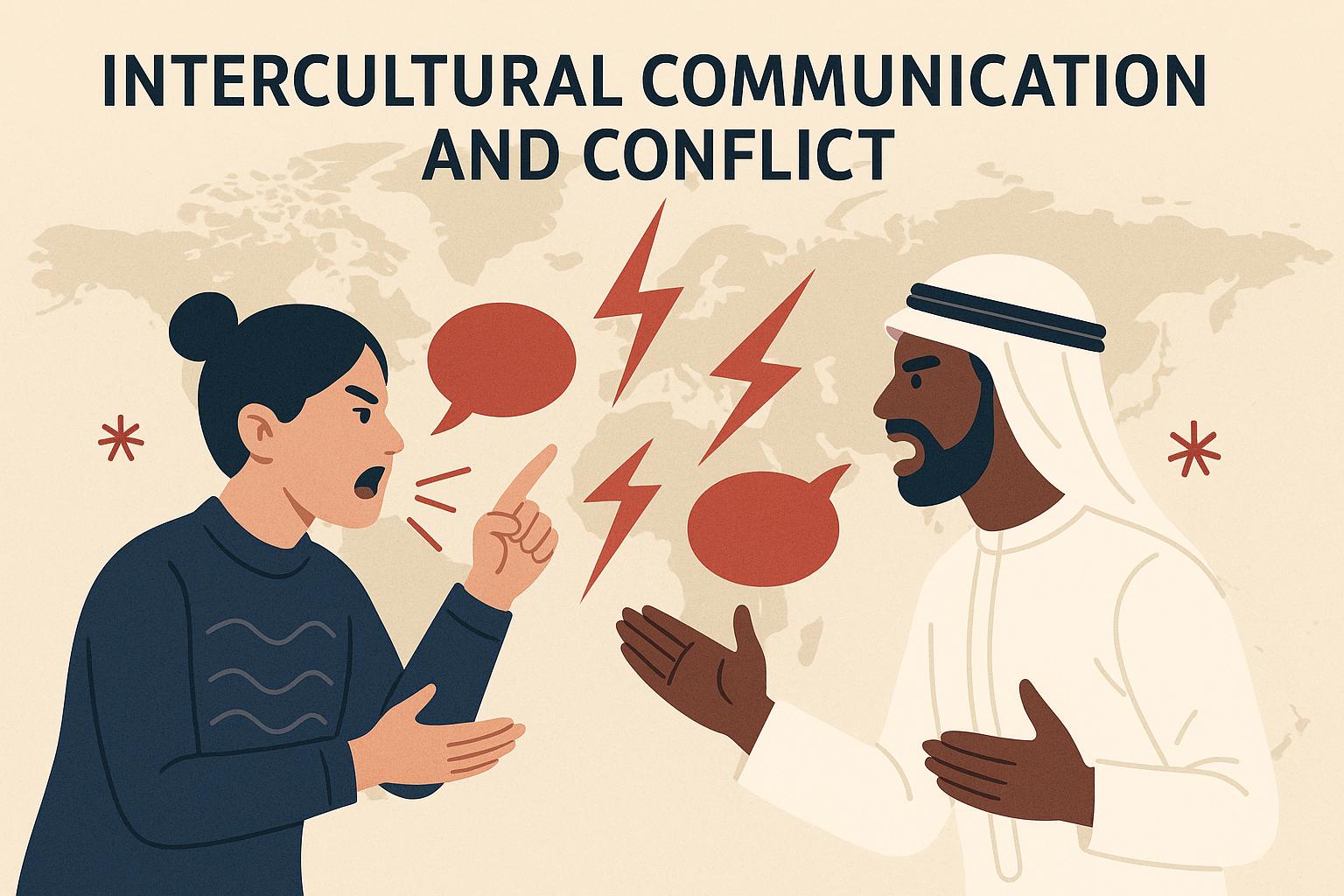
Intercultural conflict often stems from misunderstandings or differing cultural expectations.
Stereotyping: A common source of conflict in intercultural settings is the use of stereotypes. Stereotyping involves forming an oversimplified image or idea of a particular type of person or thing, which can lead to misconceptions and erroneous judgments about individuals based on their cultural group. These preconceived notions can hinder genuine understanding and lead to communication breakdowns.
Cultural Insensitivity: Lack of consideration for another culture’s norms and practices can result in feelings of disrespect among those from that culture, leading to potential conflicts. It is essential for individuals engaging in intercultural communication to be respectful and mindful of differing cultural norms to avoid conflicts.
Language Barriers: Miscommunication due to language differences can cause significant frustration and conflict. Language barriers are not limited to different verbal languages but can include misunderstandings arising from differences in jargon, idioms, and expressions unique to each culture.
Strategies for Effective Intercultural Communication
Developing strategies to navigate cultural differences effectively is essential for minimizing potential conflicts and enhancing intercultural communication.
Active Listening: One vital strategy is active listening, which involves paying close attention to the speaker, including understanding both verbal and non-verbal cues. By doing so, individuals can better understand the speaker’s intended messages and reduce misunderstandings.
Empathy: Cultivating empathy is another powerful strategy. By taking the time to understand another’s emotions and perspectives, communicators can foster an environment of mutual respect and cooperation, making it easier to find common ground and resolve potential conflicts amicably.
Flexibility and Adaptability: Approaching intercultural communication with flexibility and adaptability is crucial. Recognizing and respecting cultural differences allows individuals to tailor their communication style to better fit the expectations and norms of their audience, facilitating more effective and harmonious interactions.
In conclusion, intercultural communication is a multi-faceted process that requires understanding and accommodating cultural differences. By fostering cultural awareness, adapting communication styles, and respecting the diverse values and practices of others, individuals can engage more effectively in intercultural interactions, minimizing conflicts and enhancing mutual understanding. As our world continues to integrate on various levels, the ability to communicate across cultures becomes not just advantageous, but essential.